01 · ABSENCE
BOOKS × GSTR-2B
Credit your supplier never filed
e.g. ₹7,200 of GST credit on a ₹40,000 purchase
A ₹40,000 purchase sits in your books. Your supplier never filed it, so it isn’t in your GSTR-2B.
INTERNAL AUDIT & ADVISORY · EVERY MONTH
LZR is the internal audit and advisory vendor your business appoints. It reads your bank, invoices, GST and payroll against each other, and flags what disagrees while the month is still open.
READ AGAINST EACH OTHER
01 · WHY IT HAPPENS
By then the duplicate is a write-off and the GSTR-2B mismatch is a lapsed credit. Both become corrections instead of decisions.
02 · WHAT IT CATCHES
Six shapes. Every flag is one of them. Amounts shown are illustrative.
01 · ABSENCE
BOOKS × GSTR-2B
e.g. ₹7,200 of GST credit on a ₹40,000 purchase
A ₹40,000 purchase sits in your books. Your supplier never filed it, so it isn’t in your GSTR-2B.
02 · HISTORY
BANK × CREDITORS
e.g. ₹85,000 held for a second look
The creditors ledger has no history with this vendor. It gets a second look before it clears, not after.
03 · COMPARISON
INVOICE × BANK
e.g. ₹42,000 still recoverable at the bank
The same invoice, booked twice and paid twice. Recoverable at the bank this week; a credit note you chase for a quarter after.
04 · THRESHOLD
INVOICE × GSTR-1
e.g. one GST notice avoided
An invoice crosses the e-invoice limit and your filed GSTR-1 has no e-invoice against it. It looks correct until it doesn’t.
05 · DISTRIBUTION
INVOICE × HISTORY
e.g. ₹38,000 against a ₹12,000 norm
Usually ₹12,000 a month. This month ₹38,000, no explanation. Asked about before it goes out, not paid on autopilot.
06 · CONFLICT
26AS × DEBTORS
e.g. ₹24,000 of 26AS credit unmatched
26AS credits ₹1,20,000 against you; your debtors show ₹96,000. Unbilled revenue, or credit about to be forfeited.
Lakhs & crores
₹1,08,618, not ₹108,618. Amounts grouped the way your team reads them.
GSTIN
GST and GSTIN understood natively, on every payee.
85%
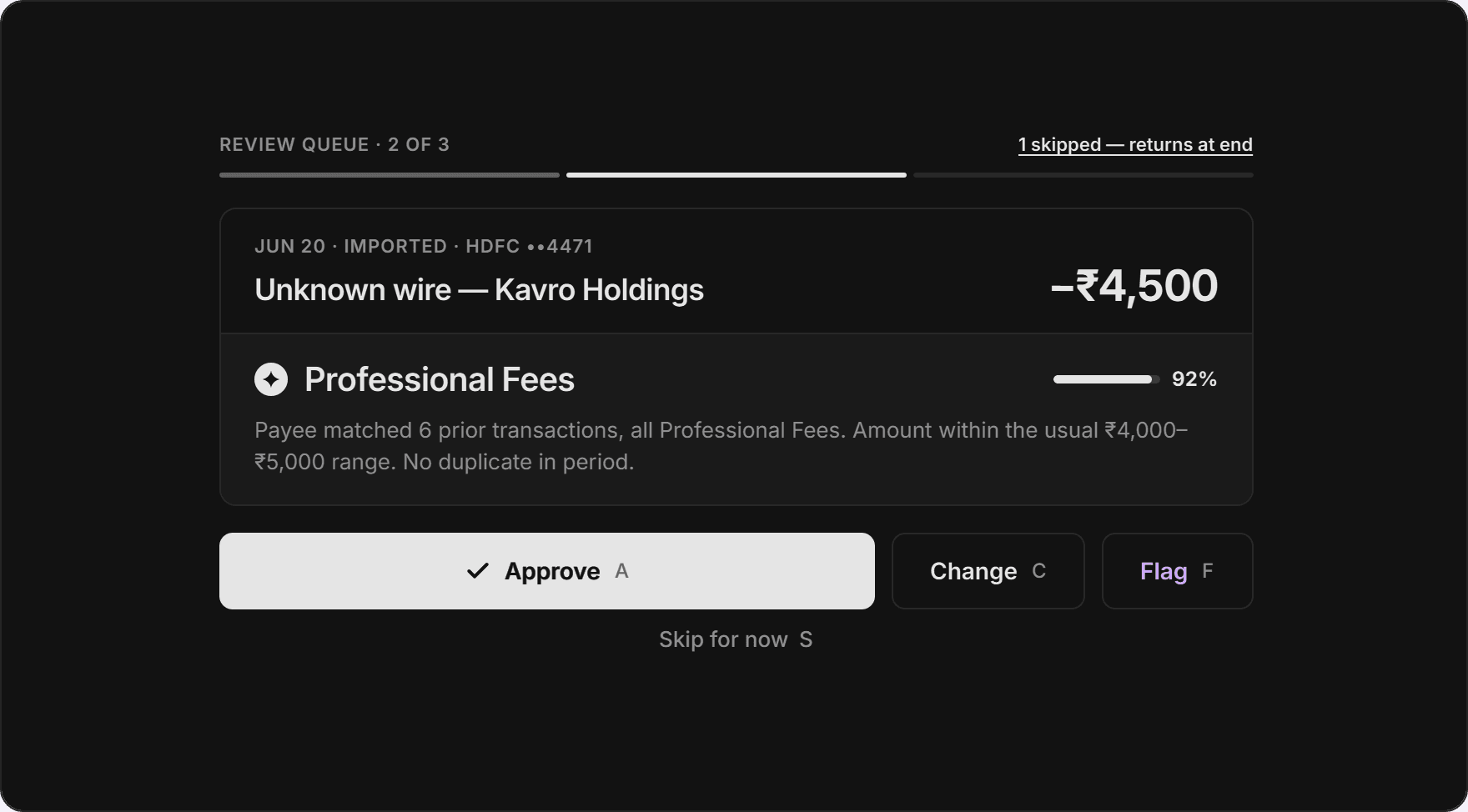
Below this confidence, a person checks the category.
0 rows
ever deleted. Every change is recorded against who made it.
03 · HOW IT WORKS
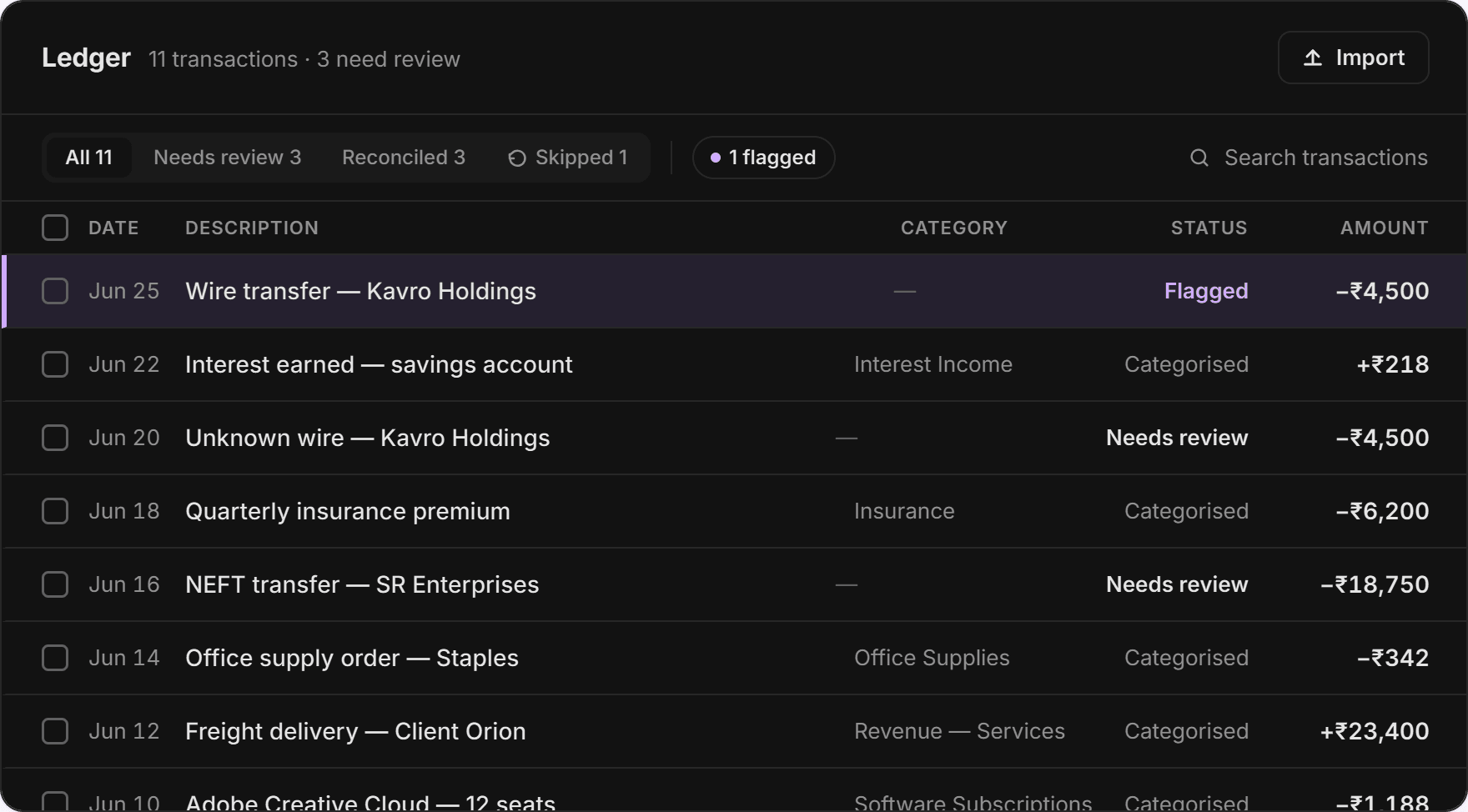
STEP 1 · THE AGENT PROPOSES
Bank, invoices, GST, TDS and payroll are read together. Anything that disagrees is marked before anyone asks.
STEP 2 · A PERSON DECIDES
Nothing posts to the books on the agent’s word alone, and the reviewer can always disagree with it.
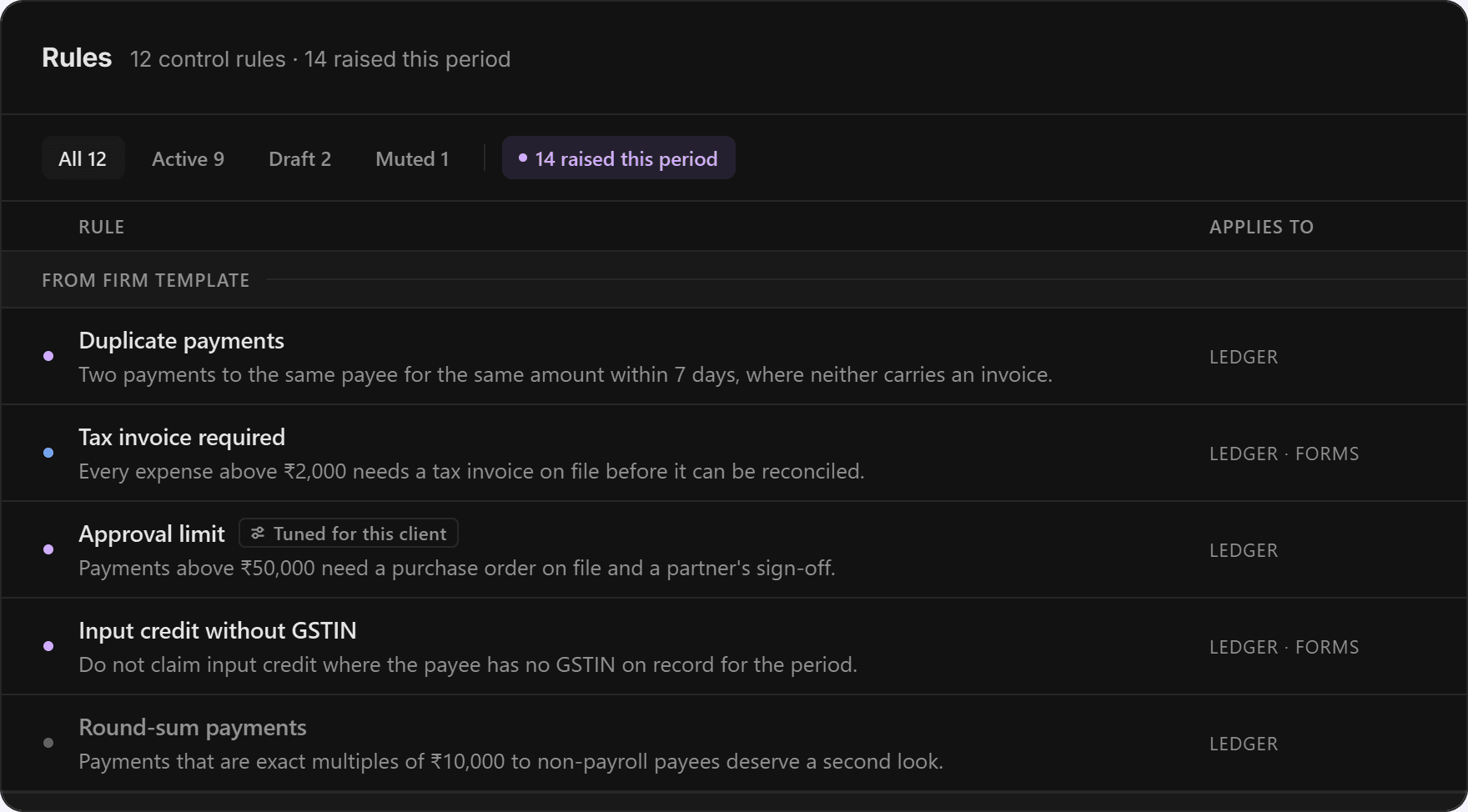
STEP 3 · THE TRAIL RECORDS WHO
Each entry carries the person, rule, or agent that set it, and when. Readable later, without reconstruction.
STEP 1 · THE AGENT PROPOSES
Bank, invoices, GST, TDS and payroll are read together. Anything that disagrees is marked before anyone asks.

STEP 2 · A PERSON DECIDES
Nothing posts to the books on the agent’s word alone, and the reviewer can always disagree with it.

STEP 3 · THE TRAIL RECORDS WHO
Each entry carries the person, rule, or agent that set it, and when. Readable later, without reconstruction.

04 · WHAT IT WON’T DO
Filing and sign-off stay with your CA. LZR prepares and evidences the review before that.
99% confidence and 40% confidence are both proposals until a reviewer says yes.
When a reviewer changes a category, that becomes the rule for that payee.
Every proposal shows what it matched on. Every flag names the rule that raised it.
05 · WHAT CHANGES FOR YOU
When you see June
TODAY
In August
WITH LZR
While June is still open
A duplicate payment
TODAY
Chased for a quarter
WITH LZR
Stopped before it clears
A GST credit gap
TODAY
Lapsed, and lost
WITH LZR
Raised before you file
Who reviews it
TODAY
Nobody, until year-end
WITH LZR
LZR, every month, as your auditor
06 · WORKING WITH LZR
You engage LZR directly. It works alongside your in-house accounts team or your CA, reviews every month while it’s still open, and reports to you.
Early access opens to businesses in small groups. We write once, when your seat is ready.
As your internal audit and advisory vendor, alongside whoever keeps your books.
Bank, invoices, GST and payroll read against each other, with every flag and who decided it.